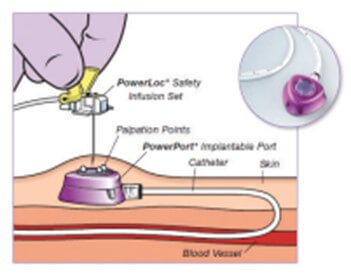
A portacath is placed under the skin to provide easy access to the large veins for chemotherapy treatments.
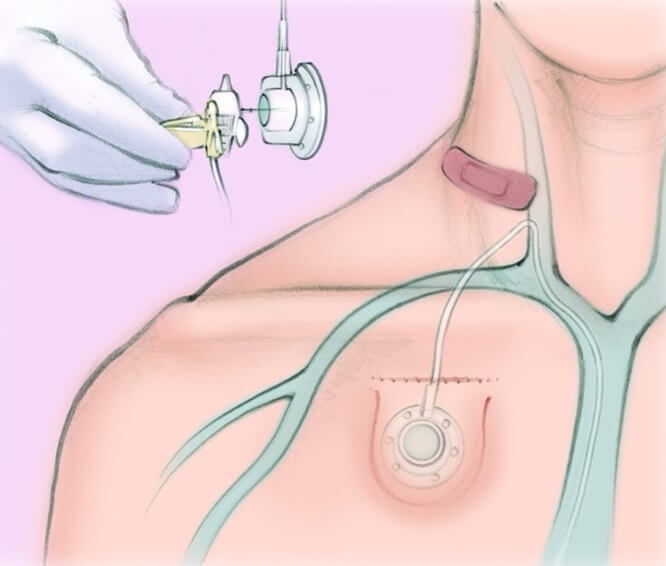
Whilst it may seem easier to have chemotherapy through a small cannula placed in an arm vein, the chemotherapy medicine can be very harsh on the walls of the veins, and the small veins in your arm are usually only 2-3mm in diameter. The chemotherapy damages them. The large vein in your chest is >10mm in diameter, with the chemotherapy medicine flowing throughout the vasculature before it can sit against the vein wall and damage it.
The port is a small bump under the skin, usually on the chest, and is connected to a catheter that goes into the large veins in your chest. It is generally difficult to notice this bump unless you are skinny.
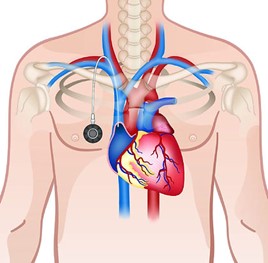
The right side is the best side for the port because the vein in the neck has a straight line to the heart, whereas the vein on the left side takes a few twists and turns, making the port not sit in as much of a favourable position – however, this is not a big deal if it needs to be on the left.
If you have lymphoedema of the arm from previous cancer, then it will be placed in your neck on the other side of the lymphoedema.
Patients worry about seatbelt irritation of the port – this has not been a problem in my experience. The port is buried under the skin, and you do not notice it.